"The book is a film that takes place in the mind of the reader." ~ Paulo Coelho
Showing posts with label Swashbuckler. Show all posts

Tuesday, December 30, 2025

Scaramouche, Scaramouche, will you do the fANNEdango? // how Sabatini's novel and Austen's Persuasion oppose and complement each other

Because a "Bohemian Rhapsody" reference is always fun.

Hello, friends!

Do you ever have where you're reading a book and it reminds you so much of something, that you end up describing it to people as, "It's just like XYZ, but the exact opposite!" 

...How can a story be so much like something if it is the exact opposite? Well, that's what I'm going to explore today as Rafael Sabatini's Scaramouche reminds me of Jane Austen's Persuasion.

I'm looking at how the two main characters in the respective novels--André-Louis Moreau and Anne Elliot--are diametrically opposed, but learn lessons that work well together. In fact, their differences give me a more complete picture of what I think is trying to be said by both authors, and their polarity doesn't make one better than the other, rather complementary. I find them both fascinating in different yet similar ways. Each of them have a foil in their corresponding stories (maybe Aline for André-Louis and Wentworth for Anne?) yet I've decided to do an inter-story analysis.

The most simple way of comparing them is that their names both start with "An," which is why my title is fANNEdango. Hehe. I know, it's a terrible pun, I apologize!

~ This post is going to have mild spoilers for the two works as I'll be discussing the character development and lessons learned. Scaramouche itself has SO MUCH happening in terms of plot that I will not give away, so reading this post there are a few reveals but you'll be safe from the really big plot twists. ~

When I was throwing around ideas of how to articulate myself I was calling Scaramouche the "anti-Persuasion." But that doesn't mean that I am against the work! My freshman year of college I gave a whole persuasive speech about why one should read Jane Austen, if that gives you any indication that I am "pro-Persuasion." I also lay claim on Persuasion for being my second favorite Jane Austen--after Pride and Prejudice because I'm basic--but I have only read it once and that was six years ago, so forgive any of my mistakes about the plot interpretation or quote context as I am not a Persuasion scholar.  

I'm hoping to draw some of you Austen fans in, as most people probably haven't heard of Rafael Sabatini. He was an author in the early 20th century whose work featured pirate stories, such as The Black Swan, The Sea Hawk, and Captain Blood, the last of which was adapted into a movie with Errol Flynn in 1935. While low on the buccaneering, his historical fiction work Scaramouche is not lacking in excitement.

All the swashbuckling for the win! And all the Errol Flynn for the win!
Scaramouche has been adapted into two films--one in 1923 and the other in 1952--but has since, for the most part, fallen out of cultural recognition, with exception of the band Queen making it a catchphrase in their song "Bohemian Rhapsody." I think it's a pity that there hasn't been a more recent film adaptation because I would have a TON of fun with that. Since, though, it is not so well known, I don't expect the majority of my readers to know what I'm talking about, so here is a quick, non-spoilery overview of Scaramouche:


Set on the backdrop of the French Revolution, Sabatini looks at the class disputes and political spats that added to the layers of the revolt. André-Louis is not popular in social standings, but is one of the best lawyers of his age, and all that matters to him is his one friend Phillippe Vilmorin, his godfather, and his cousin, Aline. He's always been on the safe side of the law, but when he gets a close-up view of injustice he swears revenge and uses what talent he has: his own persuasive voice. He rallies the people on a viewpoint he does not believe in purely because he sees it as the means to the end he is pursuing. He himself ends up being the one pursued and while in hiding he exceeds at new skills and makes a name for himself in the theatrical world under the mask of Scaramouche*.

*The archetype of Scaramouche is not a creation of Sabatini's but a character in Italian opera/theatre. The New Oxford American dictionary says the term describes one who is "a boastful but cowardly person," literally "skirmish." This archetype in opera is used to be a bit of a rabble-rouser, or fool. 

To set up our contrast, here is a brief overview of Persuasion:

Anne Elliot is dealing with the aftermath of being persuaded. She was engaged to a poor yet promising lieutenant, but her family peer-pressured her into breaking it off because he was below her station. Now eight years later her family's own finances are poor, which adds to Anne's regret that she's been carrying around since she broke off the engagement. Who happens to show up in her life but her old fiancé, who is now the wealthy Captain Wentworth. Their circumstances have flipped, which adds to Anne's discouragement about being persuaded. Seeing how wrong her family was back then, she's trying to have more control in her own life. Through the book we see how Anne can be calm in times of hysteria and panic, and how she has grown to be a steady presence. Now there are new pressures of whom she should marry and she's trying to only be persuaded by her own heart.

M'kay. So how are these related? Let's introduce our protagonists.

André-Louis Moreau:

"He was born with a gift of laughter and a sense that the world was mad" (Sabatini, Scaramouche). (A pretty dope opening line if I do say so myself.)

André-Louis is annoyingly good at everything. This is to say he's strikingly intelligent in an academic sense, but not that emotionally intelligent. He resists feelings about things he cannot change. Not because he couldn't lean into emotions (as an actor you learn to interpret people to an extent) but because he does not see the benefit in it. In fact, putting on a mask helps him embrace that to a certain degree more than when he started out, however when he leaves acting he also seems to leave any emotions behind.

Yes, this is Sir Percy Blakeney of The Scarlet Pimpernel (1934), but both stories are about the French Revolution or its aftermath so let's go with it, shall we? I couldn't find a good image of him actually...okay

Anne Elliot:

“She had been forced into prudence in her youth, she learned romance as she grew older: the natural sequel of an unnatural beginning” (Austen, Persuasion).

Anne has always been the obedient one (#MiddleSibling) and throughout the course of the book we see how many strengths she has even though she tears herself down for being persuaded of something she didn't want to do. Persuasion comes from her trusting the words of others over her own fortitude. It's a sign of being insecure. Anne learns to be secure both in her characteristics and decisions as she's making them for her own benefit, not for anyone else's.

The way I see these two characters being connected is through elements of persuasion, denial, and emotions. Each of those build upon each other, so let's break those down.


Persuasion (the concept, not the book):

André-Louis's training as a lawyer means he's the one doing the persuading and he knows all the tricks of the trade, so he can spot a con from a mile away and measures everything through logic not emotion, judging others for not doing the same. He tells his friend Phillippe "You must change man, not systems" (Sabatini, Scaramouche), which implies that he is so firmly set in his own beliefs that he doesn't think other people are able to be persuaded in the long run. He ends up discovering how much a mob mentality can affect people.

In the first few chapters we see him using the unrest of the people to his own benefit: “He had wrought them up to a pitch of dangerous passion, and they were ripe for any violence to which he urged them. If he had failed with the windmill, at least he was now master of the wind” (Sabatini, Scaramouche). 

I do love a good Don Quijote reference.

Despite---or possibly because of---being a student of the law, he doesn't actually care that much for the laws itself, yet believes that the only way to find justice is to play that game. The current systems are deeply disturbing to Phillippe, but André-Louis himself has a bit of a nihilistic mindset; whatever replaces this current government will likely have its own flaws.

“I am ready to admit that the present government is execrable, unjust, tyrannical—what you will; but I beg you to look ahead, and to see that the government for which it is aimed at exchanging it may be infinitely worse” (Sabatini, Scaramouche).

André-Louis resists being persuaded: Phillippe tries to persuade him to stand up for justice; his godfather tries to persuade him to not be involved in politics; Le Chapelier and others try to persuade him to be MORE invested in politics. André-Louis ends up doing some of these things, i.e. getting quite involved in politics, but he does it for his own reasons, not what anyone else said.

Footage of Phillippe and André-Louis, courtesy of Enola Holmes (2020).

Let's take the last example from my above list, where Le Chapelier and another show up to André-Louis's dueling studio to ask André-Louis to use his skills and, well, kill the people in the meetings that are killing all of their own.

André-Louis refuses, saying that is a despicable use of the sword and that succumbing to being like their enemies makes them no better than their enemies. He fully lays them out, eloquently and brutally as is his want. Le Chapelier sees it is no use and says, fine, we'll just have to find someone else to deal with La Tour d'Azyr.

Aka André-Louis's archenemesis.

And André-Louis flips on a coin.

But from what we have seen of his character so far, it's not a contradiction to his personality. He's doing it for his own reasons, not for what anyone else is persuading him to do. He voiced opinions that were not his own to spite La Tour d'Azyr. He's given up careers to spite La Tour d'Azyr. Now he'll give up his morals to fight La Tour d'Azyr, but that is his reasoning and no one else's.

Some "sword fighting," for those of you still celebrating Christmas until Jan. 6th.

Persuasion has an after-effect, which is what Austen's whole book is about. To wrap that up in one word (which is not the title), I would say that impacts one's integrity. Once one has been pressured to do something and it doesn't turn out in a desirable way, it makes one feel untrue to oneself and one's own initial wishes. André-Louis maintains his integrity if nothing else while Anne is trying to regain hers.

Austen's works often look at the how strong her characters are, not in a physical sense but in their personality and integrity. Anne was not persuaded because she had a "weak character," it was because she cared about people; “If I was wrong in yielding to persuasion once, remember that it was to persuasion exerted on the side of safety, not of risk” (Austen, Persuasion). 

Not my favorite version, but thought it should get a place in the post still.

Let's get something straight right away: caring for people is not weak (that's what André-Louis needs to learn, but more on that in a minute). What Anne learns is that she cared for the wrong person/people; she chose those so wrapped up in their own vanities that they persuaded her out of fearing how her choice would make society look at them, not the man who cared for her in return.

We can also sympathize with Anne for her time period, as women did not have a lot of choices; economics and wealth are constant subtle themes in Austen's bibliography. What's important in the book is that Anne is already beating herself up for making the wrong decision BEFORE Wentworth reenters the picture with changed fortunes. She's learned from her family's indulgences---what got them to their current state of "near-destitution"---that money is not everything; what matters is being happy with people one trusts. One can only be persuaded by a credible source, so Anne has come to realize she put her trust in the wrong people. It was a risk and she bet on material things instead of intangible things.

Cynicism courtesy of Amy March in Little Women (2019)

To look briefly at the other side of risk, Sabatini's novel is fraught with more threats than poverty. Andre Louis is always putting himself into danger, choosing risks, not safety, much to the distress of his family. Those things do not weigh into his decisions, but how he feels about it, and he knows his family will feel what they will, but he won't let their feelings persuade him. This leads to our next factor: denial.


Denial:

This is kind of the mushy middle between my points of persuasion and emotions, but it is what gives the story plot. If a character developed instantly, we'd be bored. 

André-Louis is in a bit of denial about his own mortality. He doesn't think of himself as being immortal, but he seems to not worry about his ultimate demise. It is Aline who convinces him early on to run away. It is his godfather who is always worried about the risks. Yet André-Louis repeatedly acts as if no one cares about him, as if he must only look out for himself. There's this whole scene where he gaslights himself into thinking that his adversary is the one who is cared about and it couldn't possibly be him.

“I am just a rascal who tries to be honest—Scaramouche always, in fact; a creature of sophistries" (Sabatini, Scaramouche).

There's also a little bit where André-Louis insists "I am not a man of action." He says this several times, it kind of becomes his MO by the end and is always a pointed remark at one person. That one person is admitted to be honest at all times. The ingredients of "man of action" and honesty/lies, leads me to take the negation of a quote from The Princess Bride (1987); if André-Louis is NOT a man of action, lies do become him? 

What's another word for lies to oneself? Denial.

This is surprising because to be a lawyer and a swordsman means he must have studied, and in studying you must have learned that man is mortal, so you would've put the poison as far away from yourself---hold up, that's still from The Princess Bride (1987).

Jokes aside, André-Louis is in denial because he thinks he is being true to himself. And he is, but he's also very much in denial of certain feelings. The feelings he has categorized as getting him into trouble in the past; the feelings he thinks will cloud his judgement: love, compassion, care, etc..

The thought of being judged by others has made Anne in denial about how others feel. She's sure that her past mistakes are irreparable.

Looking to the past, not the future.

“Soon, however, she began to reason with herself, and try to be feeling less. Eight years, almost eight years had passed, since all had been given up. How absurd to be resuming the agitation which such an interval had banished into distance and indistinctness! What might not eight years do? Events of every description, changes, alienations, removals,--all, all must be comprised in it; and oblivion of the past...

Alas! with all her reasonings, she found, that to retentive feelings eight years may be little more than nothing” (Austen, Persuasion, emphasis mine).

Linguistically, the opposite of denial would probably be approval, but there is a line to walk in the real world. The book laments, “How quick come the reasons for approving what we like” (Austen, Persuasion). Anne is dissimilar to her father and sisters because she doesn't just approve everything that sounds good to her, and that is a strength in and of itself. Her integrity is there, if she will just look beyond what happened in the past.

Denial and regret go hand-in-hand; Anne regrets she did not choose the alternative and is in denial that her life will ever change now. Hope is a huge theme in Austen's book and Anne struggles by denying herself hope. Hope is a commitment, and one can be half hope and half agony, but that's only after there is not denial left. 

Speaking of agony, let's talk about emotions.


Emotion:

“We live at home, quiet, confined, and our feelings prey upon us” (Austen, Persuasion).

What goes better (again) with The French Revolution than a story that takes place semi-during the U.S. Civil War?

Part of the reason that Anne is living in this dance of denial is it the only way to escape from her thoughts, when she is so often neglected, left to reflect on what could've been. André-Louis, meanwhile, draws his denial from the fact that he doesn't have time to waste on those feelings. His version of the early 2010s phrase, "Ain't nobody got time for that."

While André-Louis is brilliant in many ways, Sabatini gives us an insider's view on how he is missing out on something.

“You behold him at the age of four-and-twenty stuffed with learning enough to produce an intellectual indigestion in an ordinary mind” (Sabatini, Scaramouche).

André-Louis, like all good protagonists, makes the story longer for himself by going about things the hard way. He gives himself emotional indigestion by not processing things. The story would've been much shorter if he had asked those around him how they felt, instead of trying to sort things out for himself. From being in denial, he assumes much about the people around him. Despite having a genius-level of observation, he cannot know everything about others. That wisdom comes from experience.

As for Anne, “She hoped to be wise and reasonable in time; but alas! Alas! She must confess to herself that she was not wise yet” (Austen, Persuasion). Andre-Louis also acts as if he's wise, but the narrator tells us that he is not emotionally savvy. We just hope that we become that way by the end of our stories.

Life is complicated, Edmond. And anyone who says otherwise is selling something....

Stories have ups and downs, embarrassments and mistakes; “Anne hoped she had outlived the age of blushing; but the age of emotion she certainly had not” (Austen, Persuasion). And that's the thing, emotions ARE good. André-Louis is learning this, and Anne is learning that her emotions are valid, too.


Conclusions:

I've thrown a lot of thoughts out there, so now time to be direct.

What I think Austen is trying to say: Persuasion leads to a denial of one's self, and the only way to counteract that is to reconnect with one's emotions. 

One can make a mistake, but let that be one's own mistake, not a mistake one was persuaded into making.

So many good Austen adaptations came out in 1995 and I have yet to watch this one...

“She felt that she could so much more depend upon the sincerity of those who sometimes looked or said a careless or a hasty thing, than of those whose presence of mind never varied, whose tongue never slipped” (Austen, Persuasion). 

My tongue often slips, which is why I prefer writing to express myself. The above quote reminds me of André-Louis's rigidness vs. his sincere friend, Phillippe, one who sometimes is careless but always with good intentions. André-Louis is a master of words and sees each one as his tool, looking down on those who do not wield them as well. He hasn't become a master of his emotions, yet, though. Which brings us to...

What I think Sabatini is trying to say: To counteract the denial of one's emotions, one needs to persuade oneself that one's emotions are true. 

One's integrity comes from listening to one's heart---yes, one's emotions. They are not a weakness, but a place to find oneself.

Okay, those summaries may be a bit of a stretch to fit my pattern. The gist of it is that mind and heart, decisions and mistakes, are all human things. One does not use solely logic or emotions, but a mix of both, which Scaramouche and Persuasion explore. 


Now I've persuaded myself to reread Persuasion...


Thanks to all of you for reading! I wanted to get one last post in for 2025 and decided to buckle down and get this one done since I've been stewing on it for the entirety of November and December. Thanks to Sarah Seele and Katie Hanna for encouraging me to explain myself after I posted my review on Goodreads!

How many of you are Austen fans? Any Sabatini readers? What do you think of my dissection of persuasion-denial-emotions? What are other characters who oppose and compliment each other? What is your favorite Persuasion adaptation? How do you think integrity and persuasion are related?

Happy end of 2025, friends!


Chloe the MovieCritic

If you guys haven't seen the Muppet's version of "Bohemian Rhapsody", you need to stop what you're doing and go watch it.

Friday, February 26, 2021

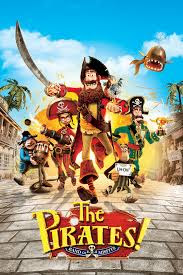
Movie Review: The Pirates! Band of Misfits (2012)

 Ahoy, mates!

Step aboard my ship as I write out this review! We will be waging war with the high seas, so hold on and enjoy!

My guarantee: On ALL of my reviews there are NO spoilers unless I give you warning. This is spoiler free!


The Pirates! Band of Misfits (2012):

Also known as The Pirates! In an Adventure with Scientists!
Based on: The Pirates! In an Adventure with Scientists! - by Gideon Defoe.
The Pirates are happy with their rooting and plundering, except they haven’t had any luck lately. No matter, as they have more important things to attend to, like the Pirate of the Year competition which they hope the Pirate Captain will win! Their chances are looking slim next to the others, so they decide to get more gold to show how impressive they are. After looting a ship that turns out to be only a science expedition they run into Charles Darwin who recognizes the Pirate’s “parrot” to be a dodo! He makes the case that Polly could gain him back some prestige in the Scientist of the Year awards. The Pirates agree to help him in order to get enough gold to win the Pirate of the Year competition. Everything seems to be going well, but is the tide about the turn?
Genres:
Animated, Adventure, Claymation.

Length: approx. 88 minutes.
Script: 9, blast! I can’t remember if there were any bad words and swearing or not. I’m giving this a tentative score of 9 because of that.
Crew: Directed by: Peter Lord & Jeff Newitt. Written by: Gideon Defoe.
Starring the voices of:
Hugh Grant as The Pirate Captain.
Martin Freeman, Brendan Gleeson, Russell Tovey, Anton Yelchin, Ashley Jensen, Al Roker, & Ben Whitehead as his crew.

David Tennant as Charles Darwin.

Imelda Staunton as Queen Victoria.
Jeremy Piven as Black Bellamy.
Salma Hayek as Cutlass Liz.
Brian Blessed as The Pirate King.
Lenny Henry as Peg Leg Hastings.
Mike Cooper as Admiral Collingwood.
David Schneider as Scarlett Morgan.
Tom Doggart, Sophie Jerrold, Sophie Laughton, Peter Lord, Kayvan Novak, & David Schaal provide additional voices.
Costumes: 6, there is a time when someone is sitting in a bathtub but not wearing anything for a few minutes and though we don’t see anything, it’s still inappropriate and not particularly funny. There are low costumes, too.
Animation: 9, I’m partial to claymation so I like it a lot. I think it’s a unique and fun style! I like how all of the characters were made to look.
Animation by:
Aardman Animations.

Music: 6, not “bad” but not memorable in any way. It does capture the “piraty feel” in places.
Music by: Theodore Shapiro.
Quotability: 7, nothing really comes to mind except this:
“It’s treacherous villainy! It’s villainous treachery!”
Content: 6, there is crude humor involving pirates, drinking, suggestive things, and killing. I thought it was a little vulgar in places, but from what I read of the book (2/3) it is tame. It’s mostly suitable for kids, who are the main audience.
Originality: 8, I wouldn’t go overboard and say I’ve never seen anything like it, but there are some fun elements.
Good For: anyone who likes claymation, families.
Age Range: I’d say the range for this movie is about from 8 up, but when you get to a certain age you might just be bored of it, which is understandable. It depends on the person.
Overall Score: 7.
Worth watching?:
Yes, actually! You might’ve thought that this review was going downhill, but there was a kernel of gold hidden within. It had a really good message which I’ll talk about that more in a minute.

Will I watch again?: If I had nothing else to do, then maybe. Or if I was sick. Actually, this seems like it would be a very good movie to watch if you are ill because it will make you laugh and feel better!


For the blogathon:
This is my second entry in Hamlette’s We ❤ Pirates Week! You won’t want to miss plundering the list of participants HERE


I’d had notes on this movie for awhile so when Hamlette announced it I jumped aboard ship immediately!


I had originally planned to review the book, too, and compare the two, but 2/3 into the audiobook I gave up because I couldn’t stand it anymore. You see, it’s just that I highly dislike satire. I have a really hard time understanding it and that is not my kind of humor at all. My sister said, “I told you so.”

I had gone into the book expecting it to be a fun and cute romp with pirates like the movie but instead was given nothing but cruelty and parody and satire. Not my kind of thing at all. From what I read, the plots hardly matched up! Therefore I was surprised by this little introduction from the Pirate Captain:

“...You see, there’s a good chance that in your more enlightened times of hover boards and A-semetrical haircuts, a daring theatrical impresario will have decided to adapt my exciting adventure with scientists into some sort of morion picture to be exhibited at your local zoetrope club. Probably, you will notice how the motion picture contains a number of differences from the book you are now listening to. I would like to reassure you that this is not because of any sinister plot to rewrite history, it’s simply that certain things are better suited to the page than to the inside of a spinning metal drum. For example, it may be that the villain in said motion picture is Queen Victoria rather than the diabolical bishop of Oxford...
“...And perhaps the motion picture contains an entire plot to do with me owning a dodo, which is obviously a ridiculous and unlikely flight of fancy. Though I would very much like to own a dodo instead of our idiot parrot, Gary, who is frankly, a nuisance. But, rest assured, that in both zoetrope display and book, my beard is still luxuriant, Black Bellamy is still a fiend with eyes of the darkest pitch, and there’s still a good bit where a chimpanzee gets dressed up in a waistcoat, and most importantly, at no point does anybody mistakenly think it is somehow inherently funny to “talk like a pirate”....”
The Pirates! In an Adventure with Scientists! - by Gideon Defoe.

I couldn’t fathom how this little note could be so accurate to something that was so different. The answer: Gideon Defoe, the author of the book, also wrote the screenplay. I’m very pleased with all of the changes that he made, which is such a rare thing for me to say.


If you haven’t experienced either then you might wonder why I’m so surprised so I’ll explain. The book is supposed to be full of humor for the sake of humor. It showed pirates as resembling real pirates with killing and cruelty willy-nilly. That’s not what I want to talk about, as this is Hamlette’s We ❤ Pirates Week! We want to talk about why we like them!


So why do we like pirates, and does that change from the book to the movie for any reason?

Yes, it does change. In the book it’s all about what the next adventure is, whereas the message of this movie is family. None of the pirates are actually related, but they are a crew and work together through it all. I think that is one of the many charms fictional pirates bring us, a camaraderie to bring them through the hardest storms.

“What is the best part of being a pirate?” Well, that’s exactly what is answered in this movie. Maybe memories and companionship are the real gold.


Thanks to Hamlette for hosting! Make sure to check out the participants HERE.

Thanks for reading! Has anyone else seen this? What is your favorite claymation movie? Why do you think that we like pirates so much?

MovieCritic

Tuesday, February 23, 2021

The We ❤ Pirates Week Tag!

Hello, my scalawags!

Are you ready for a party? I certainly am! I’m dancing around with excitement over here! 
She didn’t host one last year, but the three years previously she had a whole week set aside for us folks to obsess over fandoms, and this year we arrrrrrr talking about pirates!

I have another post coming up, but right now I’ll answer her tag questions. Savvy?


I usually try to make myself think harder by not answering any of the questions with the same movies/books, but I’m not going to hold myself to that this time. Why? To get myself straightened out I made a list of everything related to pirates that I have ever dealt with. It was surprisingly short, which should be remedied. Let’s just jump in then!


SPOILERS for Pirates of the Caribbean: At World’s End (2007), but that’s it. Don’t read this if you haven’t seen that or I’ll make you walk the plank!

The questions:
1.  What are your favorite pirate movies or books?

The question is plural, so I can freely name many! I could go on into infinity! Wait, you don't want that?


Well, I guess I'll limit myself.

The Pirates of the Caribbean movies: Curse of the Black Pearl (2003), Dead Man’s Chest (2006), and At World’s End (2007) (I’ve seen the fourth and it’s okay but not brilliant, and I haven’t seen the latest). Looking at all these gifs I have in this post has really made me want to revisit this series!

Captain Blood (1935). This had all of the swashbuckling goodness! This is one of the few “older” (pre 2000s) pirate movies that I’ve seen, so I would love recommendations as I greatly enjoyed this one!

The Pirate Hunter Chronicles: Ships, Secrets, and Survivors - by Sarah Rodecker and Helena George (they don’t love pirates like we do as they are hunters of pirates, but the story revolves so much around pirates that it definitely could be called a pirate book).


2.  Who are your favorite fictional pirates?

Captain Jack Sparrow from The Pirates of the Caribbean. He’s crazy, but: “Crazy people don’t know they’re crazy. I know I’m crazy, therefore I’m not crazy, isn’t that crazy?” which honestly describes me. That’s pretty much my motto in life.


Okay, and all of the other pirates from The Pirates of the Caribbean: Will Turner, Elizabeth Swan (here’s where the spoilers come in, as I loved her as the Pirate King!), Captain Hector Barbossa, all of them!


Captain Peter Blood from Captain Blood (1935). His actions are very understandable, but not cruel!


Captain Hook from any version of Peter Pan. I don’t like him because he is the villain, but he’s one of those villains that you just have to appreciate how well written he is. He is terrifying! There are so many excellent portrayals of him, but lately I’ve been considering Rhys Ifans who plays him in the miniseries Neverland (2011). Sure, I absolutely HATE him, but how quickly he took to piracy is impressive.


Luigi Vampa and his crew from The Count of Monte Cristo (2002). He is only there for a few minutes, but I still love his part for some reason. He influences Edmund’s story! Apparently there’s more of him in the book? I’ll find out soon.


3.  What do you like best about pirate stories? (Themes, costumes, aesthetic, etc.)

Based on the several Pinterest boards that I have, probably the aesthetics. Sword fights are certainly taken into consideration. If themes are woven in nicely then I will always appreciate that. Especially if it has any resemblance to Robin Hood. You can’t go wrong with that, right?


4.  If you were going to play a pirate on the stage or screen, what would your costume look like?

Something easy to move around in like this, but it could have simpler fabric colors:

Source

If I had to have some (PRETEND) pirate accessory, I wouldn’t mind an eye patch.


Also, one year I dressed up like Captain Hook and it was pretty sweet, so I wouldn’t mind doing that again. It was pretty convincing, too, because quite a few people I know didn’t recognize me! You can see it HERE.

5.  What pirate ship would you like to serve on?


I would love to be part of Auburn Sally’s crew on her ship in Starbordia from the book The Land of Stories: An Author’s Odyssey - by Chris Colfer. It’s an all female crew and hilarious things happen. It was the fifth book in the series and the most epic book ever! The last book really disappointed, but this one was a treasure.


6.  Any favorite sea shanties or pirate songs?

What do you do with a cursed Ashton?
Oh what do you do with a cursed Ashton early in the morning?


I should know so many but my mind is failing me. "Leave Her Johnny" is a classic that is a tad sad. For a more inspiring one, I like "The Mary Ellen Carter".


7.  Have you ever participated in International Talk Like a Pirate Day?

Every year I think, “Oh, that’s such a cool idea!” and start to do it, but then after one “Arrr!”...


I get distracted and complete forget what I was doing.


8.  Would you like to go sailing on a real tall ship?

You bet! I can tell tall tales and the higher it is the more fun it will be to do this:


But actually I just really like boats, so yes please.


9.  Have you ever learned anything about real pirates, or do you tend to stick to the fictional kind?

I was forced to do some research back in 2019 because I decided to do a crazy thing and write my own pirate story/novel for NaNoWriMo. It needs MAJOR rewrites as there are not enough “piraty” things or mystery, but I’m rather pleased with it. So yes, I know a thing or two about actual pirates, but I have the skill set (ha, as if) to make it fictional.


10. Why is the rum gone?

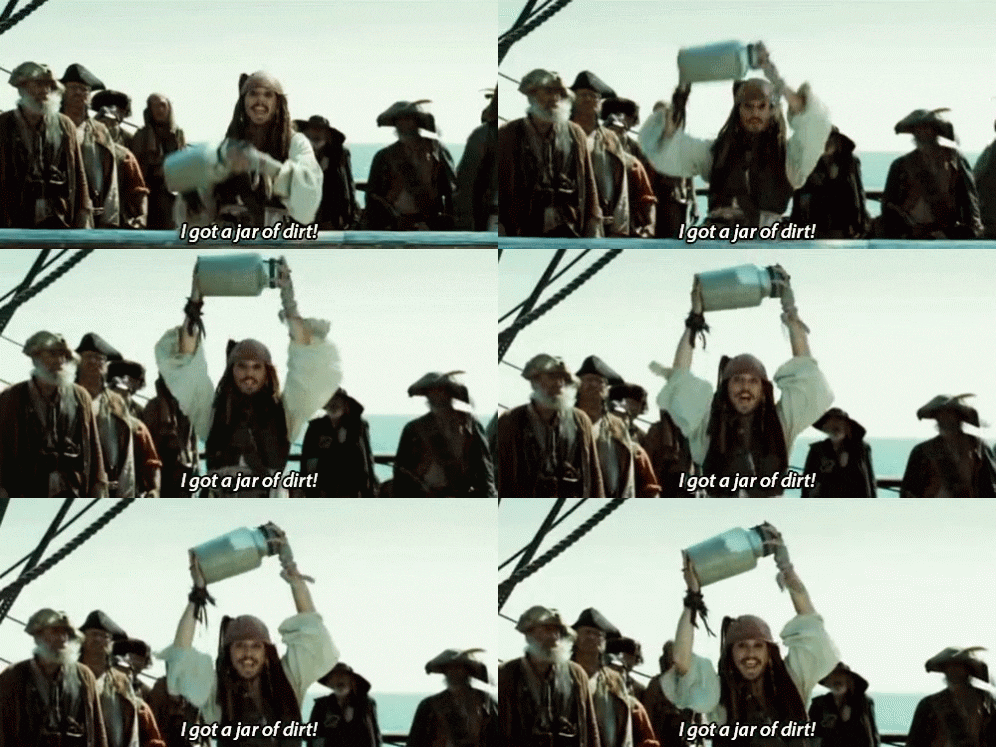
Because I have something much better:


I had to get that liquid out of there to use for this, ‘cause where else was I going to put my dirt?


Thanks to Hamlette for hosting! This is jolly good fun, and I recommend all of you checking out the other posts HERE. If you want some treasure of your own, check out Hamlette’s giveaway! You might get something rare indeed.

What do all of you think of my answers? Please recommend pirate books and movies galore to me!

MovieCritic

Thursday, August 27, 2020

Book Review: Ships, Secrets, & Survivors - by Sarah Rodecker and Helena George

Ahoy, mates!

Today I am participating in the blog tour of Helena George and Sarah Rodecker's debut novel, the first in The Pirate Hunter Chronicles! For more details on this book check out the other spots on the blog tour HERE or HERE.

My guarantee: On ALL of my reviews there are NO spoilers unless I give you warning. This is spoiler free!

Disclaimer: I got a free copy in exchange for an honest review. These opinions are my own.


Ships, Secrets, & Survivors - by Sarah Rodecker and Helena George:
The Scaera Dumeda is a test for those wishing to become ambassadors for the Alliance. People sail from all over to get in. Princess Adima knows that she can do better for her country by being in it and is hopeful for entry to the tests. Ravin is on the run from his past, and when his name is called he knows something is terribly wrong. Both of them find themselves wrapped up in an adventure that leads to the sea with the Captain Jay Hill and his crew. Who is behind all of this, and is it too late to prove that they aren't murderers?
Genre: Swashbucker, Adventure, Fantasy.
Characters: 10! I love each and every one of them! They are all so real! I would talk about all of them, but I'm limiting myself to only my top favorites:
Ravin: You have to love this quiet guy indecisivewith a dark past he is running from! His dialogue is the most accurate of all time. I just feel for him.
Justin: This guy, this guy, is hilarious! My favorite of all of them.
Josiah: He's so positive and kind, he just is a sweetheart!
Adi: I love how quick on her feet she is and can make so many decisions! As someone who is the most indecisive in the world, I loved that she is able to do that.
Ash: Of all the characters, I want to know more about her! She is mysterious and tough, but a good leader in training!
Jay Hill: Jay commands all of your attention, so I have to grant it to him. He is the showman! His love for his crew is so great.
Words: 10, characters are mentioned as swearing, but all of the words themselves are omitted, which I really appreciated.
"If you look a horrible disaster, then you're all the more likely to get your named called and have to stand in front of all the people, right?"
Content: 8, there is violence, mentions of blood, and people being sick. There are deaths and killing, but there are discussions around that which are super thought provoking. Characters are hurt and there are mentions of abuse, but are shown as bad.
"If you think you're the only one here with a past, look around. We all have stories to tell, some dirtier than others."
Originality: 10, this gets a full score out of me! At every turn there is something new and I love it. Magical ships, tests for leadership, ragtag crews, count me in!
Good For: any fantasy and pirate story lovers.
Age Range: There are a lot of deaths and whatnot, but that depends on each individual's personal preference. I think I would've been fine with reading this when I was younger than 13, but that's just me.
Overall Score: 9.5!
Worth reading?: Yes, indeed! I feel so fulfilled with my daily dose of adventure now! The plot is so engaging, I'm really looking forward to more stories in this series!
Will I read again?: So far I have read it twice, and I can see this as something to enjoy from time to time, so yes!
Bonus thoughts:
This is an epic adventure if you're every looking for one! I would definitely recommend it.

Find more information on Goodreads.
Order on the WEBSITE or AMAZON.


Sarah and Helena are also hosting an awesome giveaway which I suggest you check out right HERE, right now. There is some incredible stuff there to send this book off into the world! Check both of their blogs and congratulate them on this achievement!

A huge thank you to them for allowing me to be part of this!

Thanks to all of you for reading! Have I peaked your interest? I hope I have, because this book is totally worth it!

MovieCritic

Thursday, September 19, 2019

Movie Review: Pirates of the Caribbean: At World's End (2007)

Ahoy, matey!

This fine day that ye find yerselves in just 'appens to be National Talk Like a Pirate Day!
Because of this occasion I am in a jolly mood to write a film review. Enjoy yerselves!
"I knew there was a good reason."

(Whew, it is really hard to type like this)

Here are the links to when I reviewed the first two movies:
Curse of the Black Pearl
Dead Man's Chest

My guarantee: On ALL of my reviews there are NO spoilers unless I give you warning.


Pirates of the Caribbean: At World's End (2007):
Based on: the Pirates of the Caribbean ride at Disneyland.
"For certain you have to be lost to find something that cannot be found, else everyone would know where it is."
Continuing from where the second movie ended, the crew head to Davy Jones's Locker to get help. They encounter different tests, and they also find that the loyalties among the crew might be divided. With the East Indian Trading Company on the rise and in control of the sea, pirates from all around the world will have to decide, is worth it to all join together and fight?
"And so despair leads to betrayal."
Genre: Swashbuckler, Adventure.
Length: approx. 169 minutes. Yeah, it's really long.
Costumes: 6, there are scenes were people are wearing no shirts, or things are low.
Script: 9, I didn't notice any bad words, and I'm usually very sensitive to that.
"Words whispered through prison bars loose their charm."
Crew:
Directed by: Gore Verbinski.
Written by: Ted Elliott & Terry Rossio.
Starring:
Johnny Depp as Captain Jack Sparrow.
"'You're mad!'
'Thank goodness for that because if I wasn't this probably wouldn't work.'" (This is actually one of my mottoes)
Orlando Bloom as Will Turner.
Keira Knightley as Elizabeth Swann.
Geoffrey Rush as Hector Barbossa.
Bill Nighy as Davy Jones.
Tom Hollander as Cutler Beckett.
Kevin R. McNally as Gibbs.
Lee Arenberg and Mackenzie Crook as Pintel and Ragetti.
Jack Davenport as James Norrington.
Chow Yun-fat as Sao Feng.
Naomie Harris as Tia Dalma.
Stellan Skarsgård as Bootstrap Bill Turner.
Martin Klebba as Marty.
David Bailie as Cotton.
Jonathan Pryce as Weatherby Swann.
David Schofield as Mr. Mercer.
Keith Richards as Edward Teague.
Greg Ellis as Theodore Groves.
Cinematography: 9, it has some really cool things, though sometimes the CGI is a little obvious.
Cinematography by: Dariusz Wolski.
Music: 10! Oh, it is so good! One of my favorites.
Music by: Hans Zimmer.
Quotes: 9, "Now we're being followed by rocks. Never had that before."
Storyline: 5, fighting, violence, gruesome, death, hanging, bringing people back from the dead, drinking, and some very suggestive things. There is this one rather suggestive scene (with what leads up to it and what follows), but I was actually really pleased with how they did it because I had remembered it differently.
"Gentlemen, I wash my hands of this weirdness."
Good For: Anyone who loves swashbucklers (that's me) and adventure movies, whoever has had to make hard decisions, anyone who is missing people.
Age Range: It is rated PG-13 because there is a lot of fighting (and the suggestive scene I mentioned), and I would agree with that.
Overall Score: 8!
"We need to interrogate survivors and that works best when they're alive."
Bonus thoughts:
This movie is so long, and there is so much in here! I feel like I would understand more of it if I rewatched it a lot, but it is hard to find the time. The first and second movies will always be my favorites just because this one is a little too weird for me. It is a very satisfying conclusion (*cough*but now it isn't the end*cough*). Megan wrote a really good post on it that you should check out! (There are spoilers though).


Thank ye fer readin'! Which of the Pirates of the Caribbean movies is your favorite? Have a good National Talk Like a Pirate Day!

MovieCritic
"If you want a happy ending, that depends, of course, where you stop your story." -Orson Welles