"The book is a film that takes place in the mind of the reader." ~ Paulo Coelho

Thursday, February 6, 2020

Book Review: Till We Have Faces - by C. S. Lewis

Hello everyone, and happy February!

Last month Olivia, who blogs at Meanwhile in Rivendell..., hosted a read-along for one of her favorite books, Till We Have Faces! I, of course, am late and just finished it today but still want to talk about it. I am going to do my regular style of review, then get into my thoughts on the last part aka book two.

My guarantee: On ALL of my reviews there are NO spoilers unless I give you warning: This is spoiler free.


Till We Have Faces - by C. S. Lewis:
This is retelling of the myth of Psyche and Cupid.
Two sisters, one whom the people called beautiful and one ugly, love each other dearly. It involves the people in their lives and the beliefs of the people of Glome.
(That is really vague, but how do I even say anything about this without giving anything away? )
Genre: Fantasy, Fiction, Retelling.
Characters: 8, the character arcs were fantastic!
My favorites:
Orual: I don't know if I can count her as a favorite, but she is our narrator and I pity as well as relate to her.
Psyche: How can you not like her? She is so good and kind.
The Fox: Thinking about him after wards I don't agree with his thoughts completely, but he is reasonable.
Bardia: He was helpful even when he wasn't sure of things and just overall loveable.
Words: 8, C. S. Lewis has some masterful storytelling.
"Child, to say the very thing you really mean, the whole of it, nothing more or less or other than what you really mean; that's the whole art and joy of words."
Quotes: 9, I don't know why, but one time the King called someone "mandrake root" as an insult cracked me up.
Content: 5, there are sacrifices, blood, killing, and death. and what I mean by that is that there are a lot, a lot, a lot, of suggestive things. I bothers me, but I need to stress to you that if you decide to read it then read it to the end because:
"And you won't understand the wonder and glory of my adventure unless you listen to the bad part."
The setting for this book is in a pagan culture. As in this book features gods, but if that bothers you know that C. S. Lewis was a Christian so you look for allegories.
Originality: 10! This story and it messages were incredible! I don't even know how to put it. This goes deep.
'But if I practiced true philosophy, as Socrates meant it, I should change my ugly soul into a fair one.'
Good For: anyone who has lost someone, C. S. Lewis fans, anyone who loves the message of beauty lies within.
Age Range: I would say this is at least PG-13 if not PG-15. I mean, anyone can read this, but there is a ton of suggestive stuff as I already said, and a lot is going on. I don't even understand half of it and feel that I need to reread this a lot of comprehend some things.
Overall Score: 8.


For the read-along:
I was not expecting it to be what it was. Where do I even begin? I finished this book a few hours ago and it almost seems like I have been walking in a daze. How do I even write some thoughts on this? I know a few things for certain: that ending was incredible, and I need to read this again sometime.
I liked being able to read the original myth after wards and see all of the differences. I also liked how Lewis included part of it in his story to make it Orual's motivation for writing her story to correct it.
An impression that I got from this is that true beauty lies in your heart and soul, not in how you look.

Favorite Quotes from the last section:

1.
'This was only the first stroke, a light one, the first snowflakes of the winter that I was entering.'

2.
'Of the things that followed I cannot say whether they were what men call real or what men call dream. And for all I can tell, the only difference is that what many see we call a real thing, and what only one sees we call a dream. But things that many see may have no taste or moment in them at all, and things that are shown only to one may be spears and water-spouts of truth from the very depth of truth.'

3.
'But by the death which is wisdom I supposed he meant the death of our passions and desires and vain opinions.'


A huge, huge thank you to Olivia for hosting this! And thanks to all of you for reading! Can any of you make more sense of this than I can?

MovieCritic

Friday, January 31, 2020

Heidi Read-Along: The End!

Hello, friends!

I am here one last time for Seasons of Humility's (run by Amber) Heidi Read-Along!
It has been absolutely delightful to reread this and share my thoughts as well as read everyone else's. Make sure to read Amber's final thoughts HERE as well as checking out Julie's and Carissa's blogs.

Spoiler alert! I will be talking about the ending of the book Heidi, so if you want to be surprised when you read it, don't continue reading this post any more!

Heidi - by Johanna Spyri: Chapters 19-23
Discussion format: your favorite quotes, general impressions, and three questions to answer for each week's reading

Favorite Quotes:

1.
'Then she would run round again to the sunny space in front of the hut, and seating herself on the ground would peer closely into the short grass to see how many little flower cups were open or thinking of opening.'

2.
'"Foresight is a virtue," responded the lady, amused, "and prevents many misfortunes."'

3.
'The old man stood and watched the green slopes under the higher peaks gradually growing brighter with the coming day and the dark shadows lifting from the valley, until at first a rosy light filled its hollows, and then the morning gold flooded every height and depth---the sun had risen.'

4.
'The great snowfield overhead sparkled as if set with thousands and thousands of gold and silver stars.'


General Impressions:

I'm pretty sure that when I read this the first time I thought it was boring and read it quickly to be done with, which is why I don't remember any of it. Now, with all of the books I usually read I didn't find it boring, but really relaxing!

Peter finally learns to read! Heidi at first wouldn't read because of what Peter said so it was neat that it came around and she taught him, though her way made me laugh. It is amusing how she would threaten him that he would have to go to Frankfurt and his reaction is hilarious.

Clara and Grandmamma get to visit! It was very short, but the peek into Alm-Uncle's made a lot of sense. His taking care of Clara makes my heart happy! Just delightful happenings on the mountain ensue.

Peter! I didn't believe it possible that he could be that by naughty breaking the chair. But, Clara learns to walk because of it! I love how Grandmamma put it:
"So you see, Peter, God is able to bring good out of evil for those whom you meant to injure, and you who did the evil were left to suffer the unhappy consequences of it."
And the description of a conscience as a watchman who keeps poking you is so accurate! How we are more punished by that than anything else.

Grandmamma is just so wise all around. I loved her saying this:
"Dear child, let us enjoy all of the beautiful things that we can see, and not think about those that we cannot."
The way she was also so kind and thoughtful to the other grandmother made me happy!

Surprising Grandmamma and Herr Sesemann was so sweet! Ah, happy endings are so inspiring and uplifting. To quote Cinderella (2015), "They are quite my favorite kind."

Discussion Questions:

1. What did you think of Peter's reading lessons and Heidi's teaching methods?

Her threats seemed a little out of character, but as soon as she saw that he was going to do it she comforted him which was sweet. The way he was so into it ("No! I won't go!") cracked me up. I have had to teach people to read (with not a lot of progress), so it was interesting to see the style.

2. Which scene did you find the most beautiful or memorable in these last chapters?

In years to come I will probably remember when Clara gets to see the mountain flowers for the first time by walking. Oh, and the lessons that Peter learned, especially his penny a week for life!

3. If you could step into the pages of the book, what would you be most eager to experience? (A night gazing at the stars from the loft? Waking up to the sound of the wind through the fir trees? Sitting among the flowers and goats on the mountain? Or something else?)

The goats are such a unique part of this book, and while I am known to be doubtful of goats (it's a really long story about how I never used to think that there were goats in a certain place. It's confusing, but just ask my mom and sisters and they will tell you.), I think that it would be neat to experience being with them. Oh, and I love stars, so absolutely that.


A huge thank you to Amber for hosting this! I had a blast.

Thanks to all of you for reading! What do you think of the ending of this book?

MovieCritic

Thursday, January 30, 2020

Short Film Review: The Snow Queen (1992)

Hello, everyone!

I'm sorry that I have a lot of posts piling up at the end of the month, but I have so much that I want to talk about this month. As it is January, I want to talk about something wintry! This is a short film and I don't know if it counts as a "movie", but as I'm trying new things in 2020 we'll roll with it!

My guarantee: On ALL of my reviews there are NO spoilers unless I give you warning.

The Snow Queen (1992):
Based on: The Snow Queen - by Hans Christian Andersen.
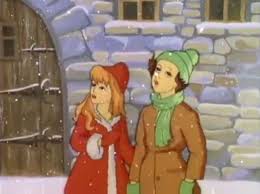
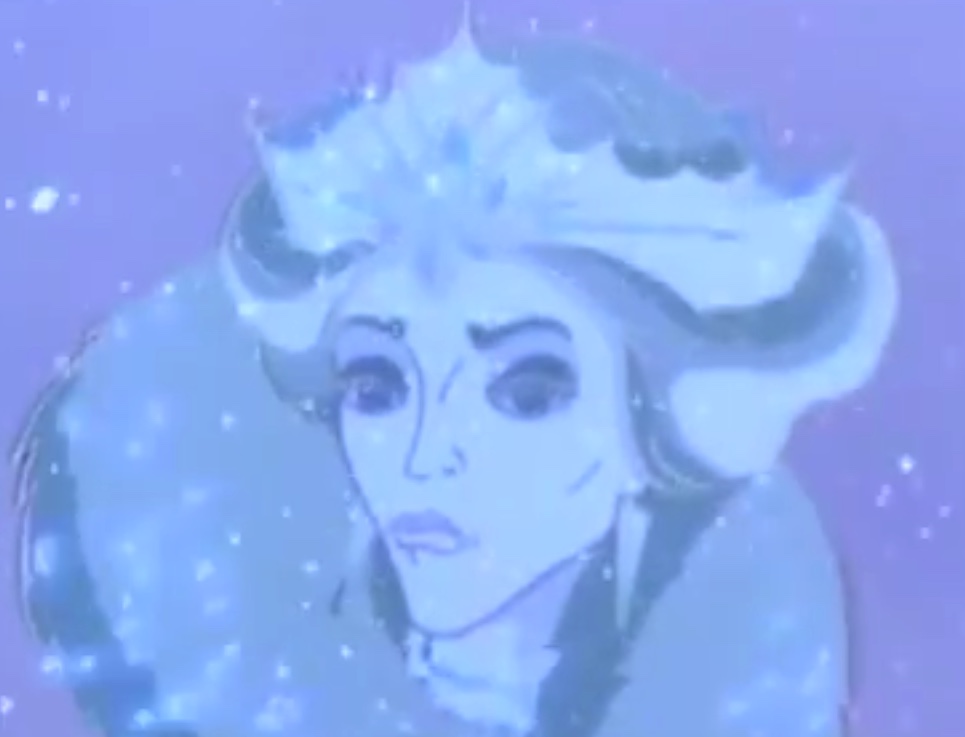
A little girl named Girda goes on an adventure to find her best friend Kai who has been stolen away by the Snow Queen.
Genre: Fantasy, animated, family.
Length: approx. 26 minutes.
Script: 10, no bad words. It pretty much follows exactly the original story. It is only narrated by Sigourney Weaver and there is no other talking.
Crew:
Directed by: Marek Buchwald, & Vladlen Barbe.
Written by: Maxine Fisher, Joshua M. Greene, & Marek Buchwald.
Starring:
Sigourney Weaver as the Narrator.
Animation: 10! Okay, so while sometimes peoples faces look a little strange, this animation is absolutely gorgeous! It is so utterly amazing!
Music: 8, I can't think of this music going with anything else, it fits so perfectly. It definitely makes me think of snow!
Music by: Jason Miles.
Content: 10, nothing bad at all!
Originality: 10! They did cut out some bits, but everything they added is so beautiful and makes me so happy! Everything they did with the raven, the mirror, and the doll fits so well, I was surprised to learn that it wasn't part of the story.
Good For: Fairytale lovers, everyone!
Age Range: Absolutely anyone can watch it! And, I recommend that they do!
Overall Score: 9.5!
Bonus thoughts:
This was my first introduction to this stunning story, and I love it so much. It had been forever since I watched it. The story of how far someone will go for one whom they love is beautiful! There is a sad lack of photos of this (two of these are screenshots), but you can watch it on YouTube, so go do that now!


Why am I reviewing this now? Well, all month Fairy Tale Central has featured The Snow Queen and I thought I should bring my favorite version to light! Check out all of the posts they did HERE.

Thanks for reading! Have any of you seen this? What is your favorite version of The Snow Queen (I'm guessing Frozen?)?

MovieCritic

Tuesday, January 28, 2020

Till We Have Faces: Chapters 8-21

Hiya, all!

Time for part two of Olivia's (Meanwhile in Rivendell...) Till We Have Faces Read-Along!
I am combining two discussions in this post because I am a little late and need to catch up. Make sure to read both of Oliva's posts for chapters 8-14 and chapters 15-21.

Spoiler alert! If you haven't read Till We Have Faces don't read any more of this post! I will be talking about all my thoughts on it with no restraint.


Till We Have Faces - by C. S. Lewis: Chapters 8-21
Format: Questions and then thoughts.

Discussion Questions:
Chapters 8-14:

1.  Psyche is described before her "sacrifice" as being painted and costumed beyond recognition.  Do you see any additional Crucifixion parallels in that?  Why might Lewis incorporate any of those sort of parallels into a character who does not seem meant to be a Christ figure?

I'm drawing a blank here. I can't think of any other similarities (though I'm sure there are quite a few). And I don't know the inside of Lewis's brain, haha! Um, any thoughts from any of you?

2.  Bardia claims that "You see [the King] at his worst with women and priests and politic men.  The truth is, he's half afraid of them."  Why would the King be afraid of them?  Does he recognize some strength in them that he knows he does not possess?

I know that sometimes to the people or things that I am most afraid of I can seem rather loud and crazy because I don't want others to know that I am afraid of them, but mostly because I am trying to convince myself that there is nothing to fear. That's what I thought of when Bardia said that, though I wouldn't compare myself to the King in any other way.

3.  Orual feels it is her duty to squelch any flickers of joy after she is separated from her sister and presumes her dead.  The Bible says we are to grieve with those who grieve.  Does this mean it is wrong to take pleasure in anything (for a period of time) after we have suffered a loss?

'The grief was coming back with my strength. So was the Fox's.'
I believe there is a time for that, but then we do need to learn to grow and see the joy in things again. I really liked this bit:
'Now, flung at me like frolic or insolence there came as if it were a voice, no words, but, if you made it into words it would be, "Why should your heart not dance?"'

4.  Psyche suggests that "people are most ashamed of . . . the things they can't help".  Is this true?

I find this to be the exact opposite for me. Things that I can't change I tend to just accept and look at the bright side, but with anything that I can help or it is my fault I feel terrible about.


Chapters 15-21:

1.  When thinking about Psyche as she was before the debacle of the Great Sacrifice, Orual characterizes the time as "when she was still happy, and still mine."  How does this sum up the possessiveness of Orual's love for Psyche?  What does it say about how she views her?

Love is selfless. Orual has only ever been loved by the Fox and Psyche, where she has been abused by others. She doesn't want to let go, which I completely understand and my heart bleds for her.

2.  Lewis describes Orual's reaction to the King's potentially fatal illness in this way:  "The largeness of a world in which he was not . . . the clear light of a sky in which that cloud would no longer hang . . . freedom."  Isn't it extraordinary how the author is able to capture and convey the feelings of an abuse survivor so accurately?

Yes. I tend to feel sorry for characters like the King, but not this time because he just hurt so many people all the time and did terrible things.

3.  In this book, Lewis gives a lot of insight into the realities of life as a soldier.  How much did Lewis's own experience as a WWI veteran influence his writing, both in general and in this book?

I feel like most of Lewis's war experience is pored out through Bardia. War also gives an appreciation of life, and I feel that expressed through his writing.


A Few Ponderings:

The part where Orual convinced Psyche to take the lamp reminded me a lot of the story of Adam and Eve. I don't blame Psyche because Orual was being cruel, but there are a lot of paralells. Psyche was in a sort of paradise and then she couldn't get in again.

The way it is written takes away the suspense. I love stories told in first person, but because it is past tense you know that Orual is going to live through everything because she is writing it.

I am quite surprised where the story is going!


Personal Highlights:
(Please pardon me if my punctuation or spelling is off on these quotes. I'm listening to an audiobook so I don't know how it looks.)


Chapters 8-14:
1.
"It is these chances that nourish the beliefs of barbarians."
"How often, grandfather, have you told me that there is no such thing as chance?"
"You are right, it was an old trick of the tongue."

2.
"And don't look at my face, look at my sword! It isn't my face that's going to fight you."

3.
"And you won't understand the wonder and glory of my adventure unless you listen to the bad part."

4.
"One can't dream things like that because one's never seen things like that."

5.
'"You don't think...possibly not as a mere...hundreth chance there might be things that are real though we can't see them?"
"Certainly I do! Such things as justice, equality, the soul, or musical notes."'

6.
"A good man might be an outlaw and a runaway." (This reminded me of Robin Hood, heehee!)

7.
'"You don't believe in the divine blood of our house." I said.
"Oh yes, of all houses, all men are of divine blood for there is the God in everyman. We are all one."'


Chapters 15-21:
1.
"I've played chess too long to hazard my queen." (Yes! Chess!)

2.
'The memory of his voice and face was kept in one of those rooms of my soul that I didn't likely unlock.'

3.
'I was with book as a woman is with child.' (This is so accurate, because once you have a story idea it is with you constantly!)


Thank you so much to Olivia for hosting! As well as thanks to all of you for reading! What are your thoughts on this?

MovieCritic
"If you want a happy ending, that depends, of course, where you stop your story." -Orson Welles